Constructionmanagement.

Construction manager and architect reviewing plans and material samples inside an active South Florida residential renovation.

One clear direction for every moving part.

Enter the story

00 / The whole

A successful project is more than a schedule. It is a coordinated sequence of decisions.

Office meeting area with a wood table and broad window.
RENOVA Construction Management / South Florida

RENOVA brings owners, designers, consultants, trades, procurement, schedules, and field conditions into one clear project conversation—keeping scope visible, decisions timely, and the work moving toward the same result.

Discuss your project
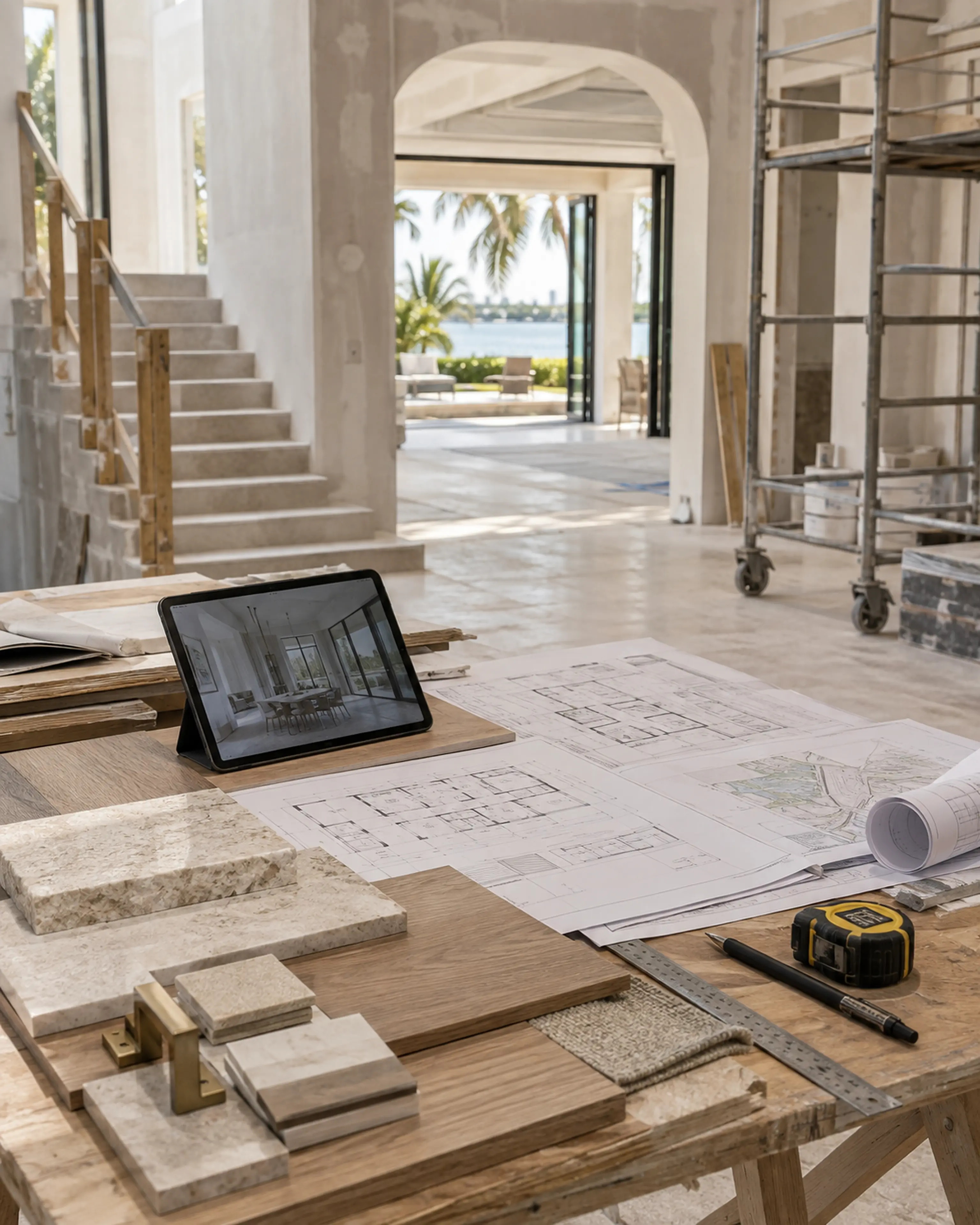
Construction planning table with drawings, limestone, white-oak samples, measuring tools, and a project tablet.
01 / SCOPEA clear briefRENOVA study
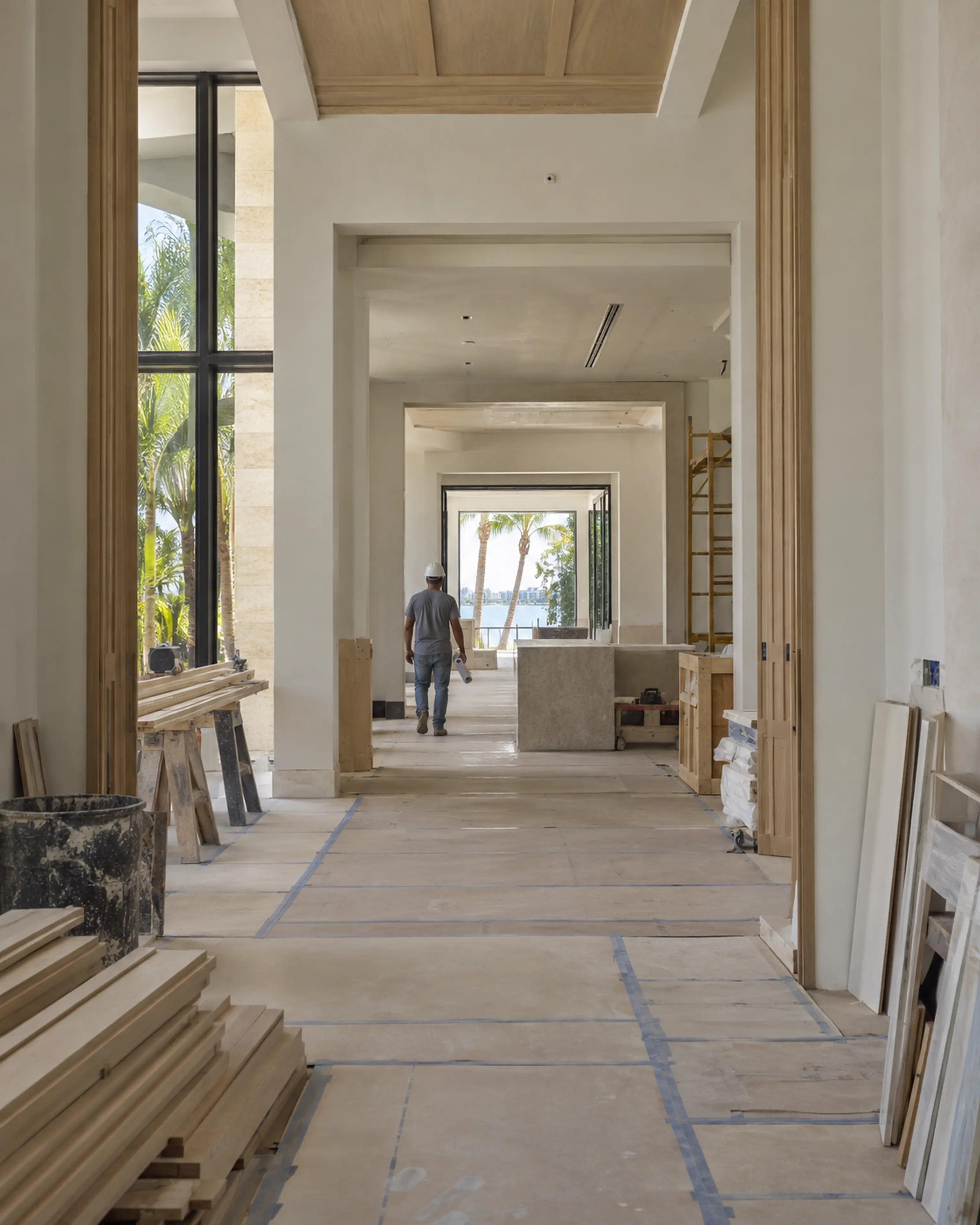
Construction superintendent walking through an organized sequence of framed rooms toward the South Florida waterfront.
03 / FIELDProgress in viewRENOVA study
Office workstations divided by glass partitions.
02 / TEAMShared informationRENOVA office

Four connected responsibilities

Good construction management makes the complicated legible.

01 / Scope

Begin by defining what the project must deliver.

Office workstation with built-in cabinets and display shelving.
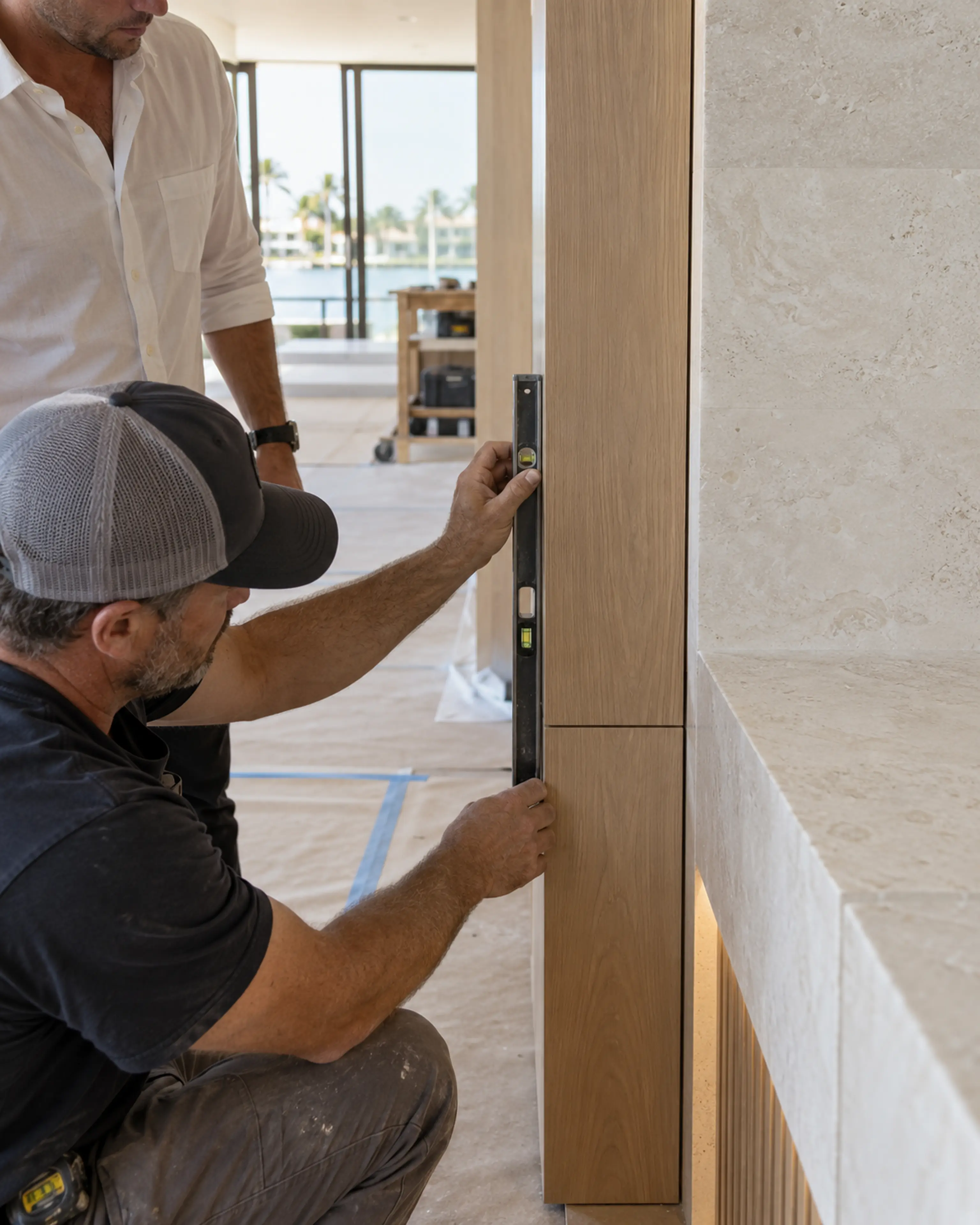
Craftsperson and construction manager checking the alignment of custom white-oak millwork beside pale limestone.

The first responsibility is clarity: what is included, what still needs definition, who owns each decision, and how the agreed scope will be measured.

Scope / Responsibilities / Deliverables

02 / Sequence

Connect design decisions, procurement, approvals, and field work.

Kitchen island with pendant lighting and wood cabinetry in a completed Boynton Beach full-gut renovation.
Living room with a wood media wall and pale sofa in the coordinated Boynton Beach renovation.

A useful schedule reflects real dependencies. Selections, lead times, consultant information, inspections, and site access all need to support the work ahead.

Schedule / Procurement / Approvals

03 / Coordination

Keep every discipline working from the same information.

Sitting area with green chairs beside the dining room in a completed whole-home project.
Bedroom with a window-side sitting area and coordinated finish details.

RENOVA coordinates the owner, design team, consultants, trades, and suppliers around current decisions so separate scopes can resolve as one project.

Owner / Design team / Trades / Suppliers

04 / Oversight

See progress in the context of the whole project.

Bathroom vanity beside a glass shower enclosure in the completed Boynton Beach project.

Field activity, proposed changes, upcoming decisions, and remaining work are reviewed together—so the next step stays connected to the original direction.

Explore completed work
Open Boca Raton living area with a pale sectional sofa and coordinated architectural finishes.

RENOVA / Construction management

Clear decisions.
Coordinated work.
One shared direction.

View the Boca Raton whole-home project

From early planning through project closeout

Managing the work.

Construction management is shaped around the property, project team, agreed scope, and stage of work. RENOVA establishes the responsibilities and communication needed for that specific project.

Scope & responsibilities
Define what is included, what requires clarification, and who is responsible for each decision.
Schedule & procurement
Connect design information, material lead times, approvals, and site work in a practical sequence.
Team communication
Keep owners, consultants, trades, and suppliers aligned around current information.
Field & change oversight
Review progress, proposed changes, and closeout items in the context of the whole project.

Project questions

Before you begin.

Is construction management for homes or commercial projects?

Both. RENOVA provides construction management for residential and commercial projects. The role and deliverables are defined around the property, team, and agreed scope.

When should a construction manager become involved?

Early planning is often useful because responsibilities, design information, approvals, procurement, and target dates can be reviewed before they begin to affect one another.

What should I share at the first conversation?

Share the property location, current drawings or reports, the work you are considering, who is already involved, and any target dates. Known constraints and open decisions are useful too.

How are the project budget and schedule managed?

The estimate and schedule are built around the agreed scope, selections, lead times, approvals, site conditions, and team responsibilities. They are reviewed as decisions are made and conditions become known.

Can existing conditions or approvals change the plan?

Yes. Existing conditions, permit requirements, consultant input, availability, and owner-directed changes can affect sequence, cost, or timing. Those impacts should be reviewed before the related work proceeds.